Your First Home in Pensacola: A Friendly Guide
Buying your first home is one of the biggest financial decisions you'll ever make — and in Pensacola, it comes with some specifics that you won't find in generic guides written for the national market. The insurance landscape is different here. The neighborhoods are specific and layered. The market dynamics have their own rhythm.
I've spent 22 years guiding buyers through Pensacola real estate. A meaningful portion of those buyers have been first-timers: people who came to me nervous, full of questions, and worried about getting it wrong. Almost every one of them left the closing table surprised by how manageable the process was when they had the right information and the right support.
This guide is the conversation I have with every first-time buyer at the beginning of our work together. Take your time with it.
Step 1: Get Your Finances in Order Before You Do Anything Else
Before you look at a single listing, you need a clear picture of your financial situation. Three things matter most:
Credit score. Most conventional lenders want a minimum credit score of 620; better rates typically require 700+. FHA loans accept scores as low as 580 with 3.5% down. VA loans (for eligible military buyers) have no minimum credit score requirement from the VA itself, though lenders typically want 580–620+. Pull your credit report at annualcreditreport.com and resolve any errors before you apply.
Down payment. Conventional loans typically require 3–20% down. FHA requires 3.5% down. VA and USDA loans allow 0% down for qualified borrowers. Florida Housing Finance Corporation offers down payment assistance programs for first-time buyers — worth researching if you're in an eligible income bracket.
Debt-to-income ratio (DTI). Lenders look at your monthly debt payments as a percentage of your gross monthly income. Most conventional lenders want DTI below 43%; lower is better. If you have significant car payments, student loans, or credit card debt, run the numbers early so you know your real purchase budget.
Step 2: Get Pre-Approved — Not Just Pre-Qualified
Pre-qualification is an informal estimate based on self-reported information. Pre-approval is a verified commitment based on documented income, assets, and credit. In Pensacola's market, sellers take pre-approved buyers seriously. Pre-qualified buyers are often treated as uncommitted.
What you'll need for pre-approval:
- W-2s and tax returns from the past 2 years
- Recent pay stubs (last 30 days)
- Bank statements (last 2–3 months)
- Government-issued ID
- Information on any outstanding debts
Get pre-approved before you schedule home tours. It tells you exactly what you can afford, makes your offer credible, and lets us move quickly when the right home appears.
Step 3: Understand Your Loan Options in Pensacola
Conventional Loans
Standard mortgage financing. 3–20% down. Best rates for buyers with 700+ credit scores and stable income history. No upfront mortgage insurance premium; PMI required below 20% down but drops off once you reach 20% equity.
FHA Loans
Federal Housing Administration loans are popular with first-time buyers for their lower down payment (3.5%) and more flexible credit requirements. Trade-off: FHA charges an upfront mortgage insurance premium (1.75% of the loan amount, which can be financed) and an annual MIP for the life of the loan in most cases. Good for buyers who need a low down payment but may not qualify for the best conventional terms.
VA Loans
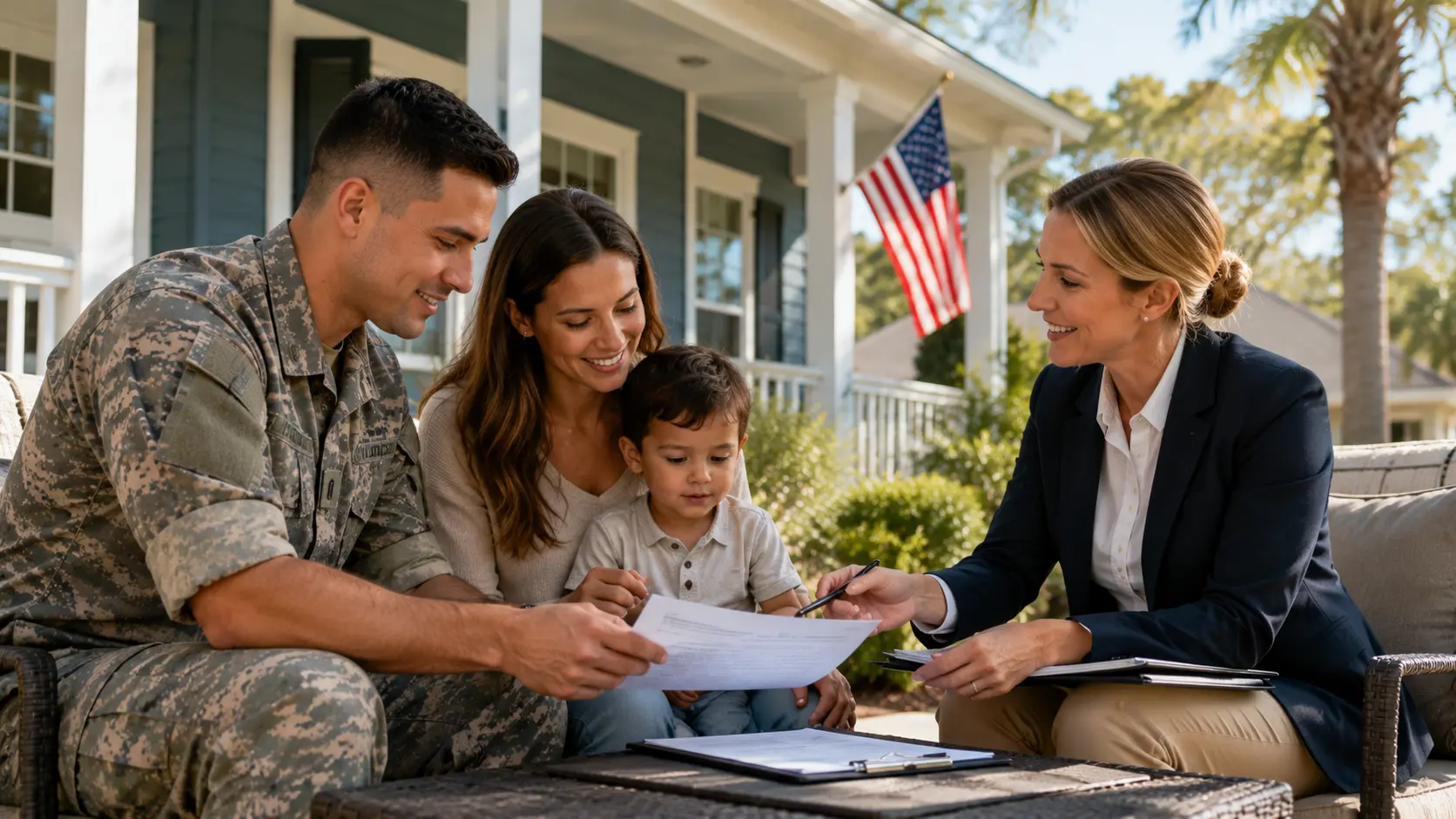
If you or your spouse is an eligible service member, veteran, or surviving spouse, a VA loan is typically the best available option. No down payment, no PMI, competitive rates. Pensacola has a large military buyer community and the local lender ecosystem is well-versed in VA transactions. See my full VA loan guide in the NAS Pensacola housing article.
USDA Loans
Available for eligible rural and suburban properties and buyers within income limits. Some areas just outside the Pensacola metro qualify. Worth checking with your lender if you're open to properties in outlying communities.
Florida Housing Finance Corporation Programs
Florida HFC offers first-time buyer programs including 30-year fixed-rate mortgages, down payment assistance (up to 3–5% of the purchase price as a second mortgage), and closing cost assistance. Income and purchase price limits apply. Your lender can confirm eligibility.
Step 4: Build Your Team
You will need: a buyer's agent, a lender, a home inspector, and an insurance broker. These four professionals, working together, protect your interests through the transaction.
Your buyer's agent. In Florida, buyer's agent representation is typically compensated through the transaction (negotiated as part of the offer structure). There is no cost to you to work with a buyer's agent. The value is significant: market knowledge, offer strategy, negotiation experience, and a professional advocate in your corner. Make sure your agent knows Pensacola specifically — local knowledge in this market is not interchangeable with general Florida real estate experience.
Your lender. Choose a lender with Pensacola market experience, not just the best-advertised rate. A local or regionally experienced lender communicates reliably with local agents, knows the appraisal dynamics of the Pensacola market, and can close on time.
Your home inspector. In Florida, home inspectors are licensed by the state. Use a certified inspector with specific experience in pre-1980s construction if you're considering an older home (East Hill, North Hill, historic neighborhoods). Request a 4-point inspection for any home over 25 years old in addition to the standard inspection.
Your insurance broker. In Pensacola, get insurance quotes before you make an offer — not after. Florida's insurance market has unique dynamics (see my full homeowners insurance guide) and the cost can significantly affect your monthly payment and total budget. An independent broker who knows the Florida coastal market is essential.
Step 5: Know What You're Looking for Before You Start
New buyers often start by touring as many homes as possible. I've found a more efficient approach: spend time upfront clarifying your actual priorities.
Questions worth answering before your first tour:
- Commute: Where are you working, and what commute time is acceptable? Pensacola's neighborhoods have meaningfully different drive times to major employers (NAS, Sacred Heart, Baptist Hospital, downtown).
- Schools: Are school zones a priority? This often drives the neighborhood decision more than any other factor. Gulf Breeze City Schools vs. Escambia County Schools is a real fork in the road.
- Home age and condition preferences: Do you want move-in ready, or are you open to a project? Historic character or newer construction? Both have strong advocates in Pensacola.
- Flood zone tolerance: Some Pensacola neighborhoods have flood insurance requirements that add meaningfully to monthly costs. Understanding your tolerance for this early saves time.
- Lifestyle: Do you want walkable urban energy (East Hill, downtown), quiet gated suburban living (Marcus Pointe, Nature Trail), or Gulf-access coastal living (Pensacola Beach, Perdido Key)?
Step 6: Making an Offer
When you find the right home, your agent will help you structure a competitive offer. Key elements:
Purchase price. Informed by comparable sales in the neighborhood — not the list price, not national averages. Your agent will pull recent comps to give you a clear picture of fair market value.
Earnest money deposit. Typically 1–3% of the purchase price in Pensacola. This goes into escrow and demonstrates your commitment to the seller. It is credited toward your closing costs at the end.
Contingencies. Standard Florida contracts include inspection, financing, and appraisal contingencies that protect you. In a competitive situation your agent may advise on how to structure these thoughtfully — but first-time buyers should not waive contingencies without a clear understanding of the risk.
Closing timeline. Typically 30–45 days in Pensacola. VA loans may run 35–45 days due to the VA appraisal process. Cash offers can close faster.
Step 7: Due Diligence — The Most Important Phase
Once your offer is accepted, the due diligence period is your opportunity to verify everything you're buying. Do not rush this phase.
Home inspection. Schedule within the first week of going under contract. Walk through with the inspector — it's educational and you'll understand the home better than any report can convey. Focus on roof condition, HVAC age, electrical panel type, plumbing, and foundation (for older homes). Minor items are normal; major systems issues are negotiating points.
Insurance quotes. Get these done in the first week. If insurance is dramatically more expensive than your budget assumed, you need to know that while you can still exit the contract.
Survey. A survey confirms lot lines and identifies encroachments. Required by most lenders. Standard in Florida real estate transactions.
HOA documents. If the home is in an HOA, review the covenants, financials, and meeting minutes. Look for upcoming special assessments or reserve funding issues.
Step 8: The Closing
Florida closings typically happen at a title company. You'll review and sign the loan documents, pay your closing costs, and receive the keys. Closing costs in Florida typically run 2–4% of the purchase price and include lender fees, title insurance, recording fees, and prepaid items (homeowners insurance, property tax escrow, prepaid interest).
Ask your lender for a Loan Estimate shortly after pre-approval and a Closing Disclosure at least 3 business days before closing — both give you a clear breakdown of all costs so there are no surprises at the table.
What First-Time Buyers Often Don't Expect in Pensacola
After doing this for 22 years, a few things consistently surprise first-time buyers here:
Insurance. Florida's insurance market is more complex and more expensive than what most buyers from other states have experienced. Get quotes early, understand what homeowners, flood, and wind coverage mean, and build the real number into your monthly budget. My full Pensacola homeowners insurance guide covers this in detail.
The speed of decisions. Even in a calmer market, good homes in the right neighborhoods still attract multiple buyers. Being pre-approved and ready to move when the right home appears is not optional — it's the price of entry.
The community. First-time buyers often come to Pensacola focused on the transaction. They leave surprised by how much they love the place. The Gulf, the pace, the neighbors, the food, the porch culture in East Hill, the sunsets from Pensacola Beach — Pensacola rewards the buyers who take time to know it.