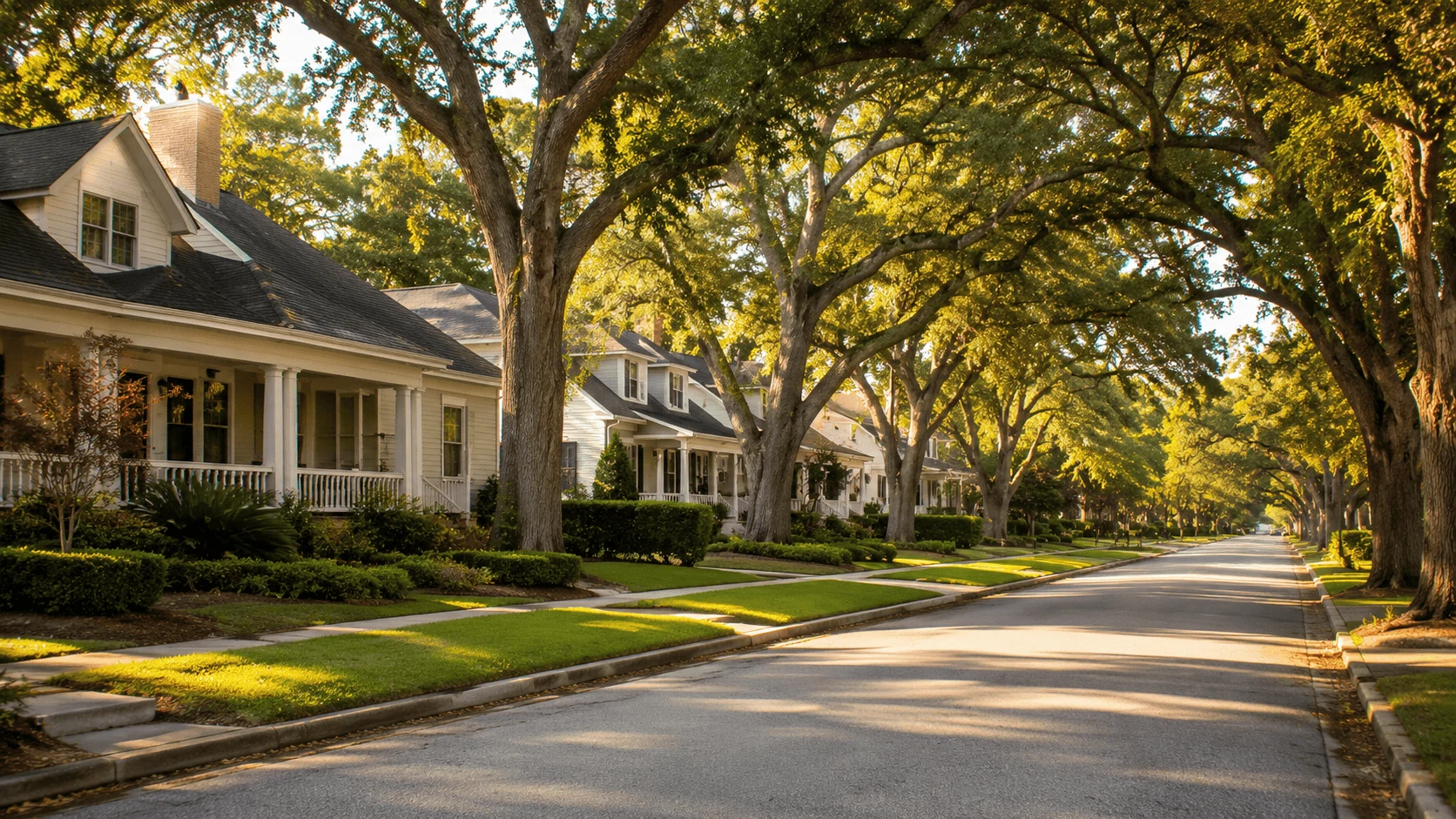
The Question Most Buyers Don't Think to Ask
When buyers walk through a home in Pensacola, they're evaluating it against their immediate needs — the layout, the finishes, the backyard. What they're less likely to think about in the moment is the question that often matters more over a five or ten-year horizon: will this home hold its value if I need to sell?
The honest answer is that most homes in a healthy market do hold value over time. But there are real differences between homes that hold value, homes that grow it, and homes that gradually give it back to the market when conditions change. After 22 years of watching those differences play out across Pensacola, I can see clearly what actually moves the needle — and what buyers often overestimate.
Location: The Only Thing You Truly Cannot Change
Every real estate conversation eventually arrives here, and for good reason. The physical location of a home — its street, its neighborhood, its proximity to the things that matter to buyers in your specific market — is the one variable that never changes. You can renovate a kitchen. You can replace a roof. You cannot move the house to a better street.
In Pensacola specifically, the location variables that matter most to long-term value are school zones, proximity to the water and the insurance implications that come with it, and neighborhood trajectory. Each of these operates differently.
School Zones and the Premium They Create
In the Pensacola market, properties within the Gulf Breeze City School district consistently command a premium over otherwise comparable homes in Escambia County. This premium has been durable through multiple market cycles because the driver — school quality — is slow to change in either direction. Buyers who purchase in strong school zones are buying into a structural advantage that tends to hold.
Within Escambia County, school zone lines matter too. Families with school-age children pay attention to specific schools, not just districts. Homes in the zones of consistently high-performing schools have historically been more resilient during soft markets than homes in weaker zones.
Water Proximity — and What It Does to Value
Being near the water in Pensacola is genuinely desirable — the bay, the Gulf, the bayous and inlets that define this landscape. But proximity to water in a coastal market also comes with specific considerations that affect long-term value: flood zone designation, insurance costs, and storm vulnerability.
Waterfront and water-adjacent homes that are properly elevated, insured, and constructed to current code tend to hold value well. Homes in flood-prone areas without the mitigation — old HVAC on the ground, no elevation certificate, outdated wind mitigation — carry risk that can compound over time as insurance markets tighten. The difference between two similar waterfront homes can be thousands of dollars per year in insurance and carrying costs.
Condition and Maintenance Records
The single most controllable factor in a home's long-term value is condition — specifically, whether the major systems have been maintained and documented.
Buyers who ask for maintenance records during due diligence are asking the right question. A home where the HVAC has been serviced annually, the roof has been inspected, and a wind mitigation report is on file is a fundamentally different asset than a home of the same age and style where none of that documentation exists. The former gives the next buyer confidence. The latter creates uncertainty that buyers price into their offers.
In Pensacola's climate — hot, humid summers, salt air near the coast, hurricane season from June through November — deferred maintenance compounds quickly. Moisture finds its way into untreated wood. Roofing ages faster under intense UV. HVAC units cycle constantly and need attention. Staying ahead of maintenance is not just comfort — it's an investment in the asset's future value.
Neighborhood Trajectory
Individual homes appreciate or depreciate within the context of their neighborhoods. A well-maintained home in a neighborhood experiencing disinvestment will face headwinds no renovation can fully overcome. A modest home in a neighborhood trending toward revitalization will benefit from energy it didn't create.
In Pensacola, the neighborhoods with the clearest positive trajectory over the past decade — East Hill, portions of Midtown, the Scenic Highway corridor — have rewarded buyers who purchased early and held. The signs of positive trajectory to look for: owner-occupied conversion, quality renovation rather than cosmetic flips, new commercial investment at the retail level, and improvements in common infrastructure.
What Buyers Often Overestimate
A few things buyers credit with protecting value that the data doesn't always support:
Pools — In Pensacola's climate, a pool adds appeal and is desirable for many buyers. But pools also add insurance cost, maintenance cost, and for families with young children sometimes narrow the buyer pool. Pools tend to add value in the upper segments of the market and be neutral-to-minor in the broader market.
Renovation specifics — A beautifully renovated kitchen adds immediate appeal but rarely recovers its full cost at resale. The value of renovation is in marketability — the ability to sell faster at a competitive price — not in dollar-for-dollar return.
Quiet streets — Buyers love quiet streets, and they're genuinely pleasant to live on. But street quietness is harder to price than school zone or water proximity, and can change over time with development. Don't overcapitalize into quiet at the expense of location fundamentals.