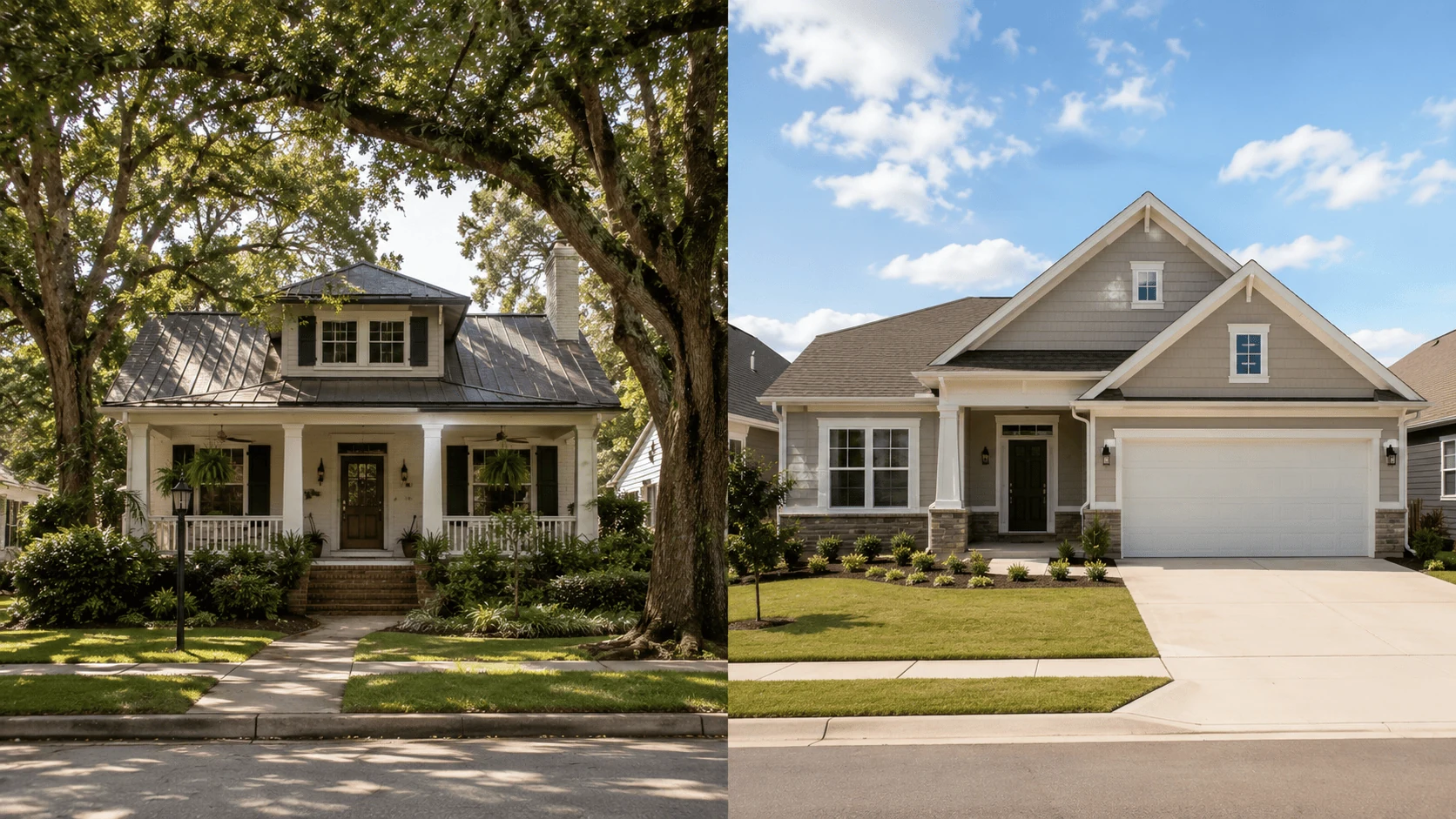
The Number That Misleads
In the early weeks of a home search, most buyers think about price as a filter. You set a range — say, $450,000 to $550,000 — and expect that the homes you see within it will feel roughly equivalent. They almost never do.
Two homes at exactly the same list price in Pensacola can sit in different neighborhoods, serve different school zones, have twenty-year gaps in their systems' ages, carry monthly carrying costs that differ by hundreds of dollars, and require completely different financial postures after closing. The list price is what the seller asks. The actual value — what you're getting for that number — is a different question entirely.
After 22 years of helping buyers understand this distinction, I've found that the buyers who navigate it best are the ones who stop comparing homes by price and start comparing them by what that price actually buys.
Location Premium: The Most Durable Difference
Two homes at the same price in Pensacola may be located in fundamentally different places on the desirability curve. A $475,000 home in the Gulf Breeze City Schools zone carries a structural advantage over a $475,000 home in a different district — not because the house is better, but because the school zone creates a narrower, more competitive buyer pool that supports the price in a way the other home cannot match.
Similarly, two $500,000 homes — one on a street in East Hill that connects to walkable retail and the bay, and one in a suburban corridor with similar square footage — are priced identically but offer profoundly different living experiences and long-term market positions.
Location premium is the most important and least obvious cost in a home's price. It's why the same money can buy significantly different things depending entirely on where you choose to spend it.
Condition and System Age: What the Price Doesn't Show
A home priced at $520,000 with a three-year-old roof, a recently replaced HVAC, and a kitchen renovation is a different financial proposition than a $520,000 home where all three of those items are approaching end of life. On paper, they're priced the same. In practice, one buyer will spend $3,000–$5,000 per year in deferred maintenance and eventual replacement costs that the other won't face for years.
The smartest buyers look at the price plus the expected maintenance horizon together. A home that costs $20,000 less but has $35,000 in near-term system replacements is not the better deal — it's just the lower sticker price. Conversely, a home priced slightly above market with well-documented, recently maintained systems often represents better total value over a five- to seven-year ownership horizon.
Insurance Costs: The Hidden Monthly Payment Variable
Two homes at the same price can carry dramatically different monthly insurance costs — and in Pensacola's market, those differences are real and large. A home with impact windows, a newer metal roof, and a recent wind mitigation inspection may qualify for substantially lower wind coverage premiums than an otherwise similar home with an older shingle roof and standard openings.
A $500,000 home with $600 per month in insurance and a $500,000 home with $1,100 per month in insurance have the same purchase price and entirely different total carrying costs. Over a five-year ownership period, that $500 per month difference is $30,000. Buyers who ask for insurance estimates on specific properties before writing offers make better decisions.
Lot and Outdoor Space: What the Square Footage Doesn't Capture
Two homes with identical interior square footage can sit on lots of 0.12 and 0.45 acres. In Pensacola's market — where outdoor living is a genuine year-round priority and lot scarcity in established neighborhoods is real — that difference matters. A larger lot provides more flexibility for future improvements, more privacy, and in many neighborhoods, more inherent scarcity value.
Similarly, a home with a screened lanai, a covered outdoor kitchen, and a pool occupies the same price bracket as a home with an undeveloped backyard and equivalent indoor space. The former has a built-out outdoor living program that costs $50,000–$150,000 to develop from scratch. The price bracket may be the same; the value in it is not.
Intangible Neighborhood Quality: The Hardest Variable to Quantify
Some of the most meaningful differences between same-price homes are the hardest to put into a spreadsheet: the quality of the street, the maturity of the trees, the walkability to things that matter to your daily life. These factors are real and durable — they affect how much you'll enjoy the home every day and how attractive it will be to the next buyer.
My suggestion to buyers who are comparing same-price homes: spend time in each neighborhood at different times of day. Walk the block. Notice who is out. Notice what connects to what. The feeling of the place is data — it's just not data you can find in a listing description.